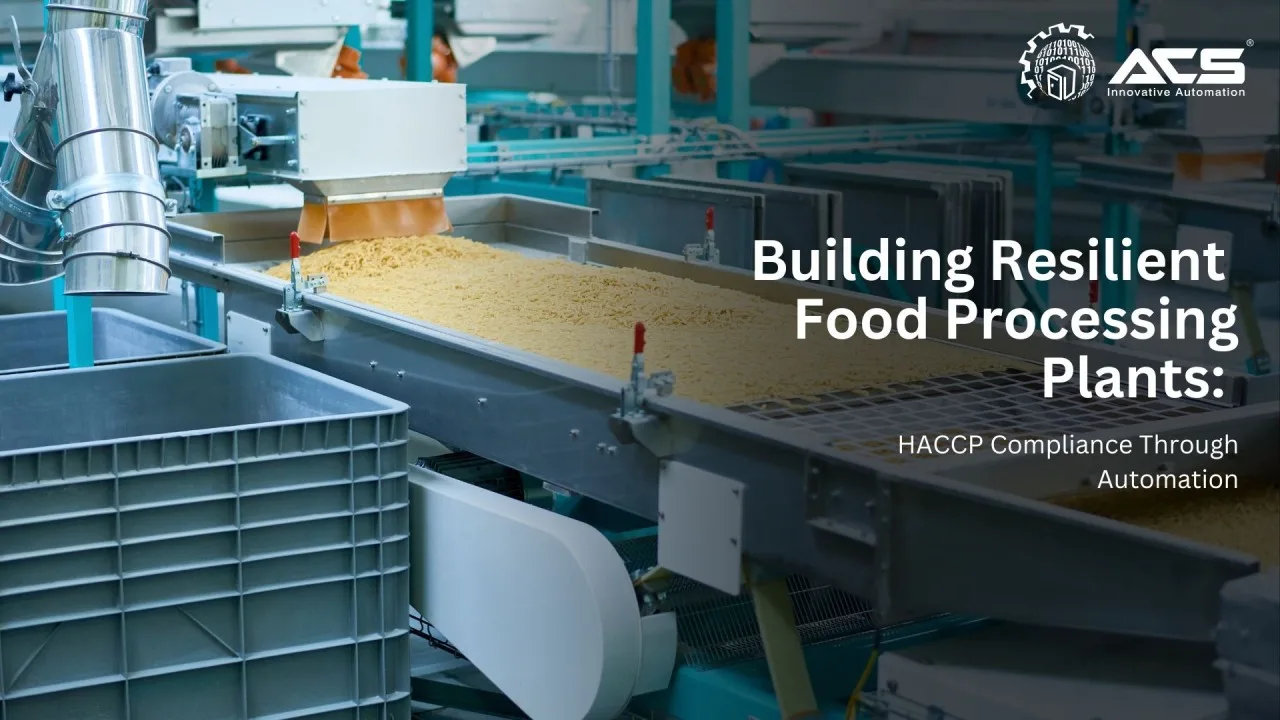
Building Resilient Food Processing Plants: HACCP Compliance Through Automation
Food safety regulations continue tightening globally, making Hazard Analysis and Critical Control Points (HACCP) compliance increasingly complex. Automation transforms HACCP from a paper-based burden into an integrated operational advantage that enhances both safety and efficiency.
Critical Control Points (CCPs) in food processing demand continuous monitoring and immediate corrective actions. Manual monitoring at 2-hour intervals leaves dangerous gaps where contamination can occur undetected. Automated systems monitor CCPs continuously, triggering immediate alerts when parameters deviate from critical limits. A dairy processing unit prevented a potential listeria outbreak by detecting pasteurization temperature dropping below 72°C for eight seconds, automatically diverting product to reprocessing.
Temperature monitoring throughout the cold chain represents the most fundamental food safety requirement. Wireless temperature sensors linked to SCADA systems track product temperature from receiving through storage, processing, and shipping. Data logging occurs every 30 seconds with automatic alert generation for out-of-specification conditions. This granular monitoring identified that a blast chiller's defrost cycle caused product temperature rises exceeding safe limits, leading to modified defrost scheduling.
Clean-in-Place (CIP) automation ensures consistent, validated cleaning between product runs. Automated CIP systems precisely control temperature, chemical concentration, flow rates, and contact times. Each cleaning cycle generates detailed reports documenting all parameters. A beverage manufacturer reduced cleaning chemical usage by 30% while improving microbiological test results through optimized CIP automation.
Metal detection and foreign object prevention require sophisticated integration between detection equipment and process control systems. When metal detectors identify contamination, automation systems instantly stop conveyors, activate reject mechanisms, and log incident details. Advanced systems track rejected products to ensure proper disposal. Integration with upstream equipment identifies potential contamination sources by correlating detection events with equipment operations.
Allergen management through automation prevents dangerous cross-contamination. Recipe management systems enforce proper production sequencing, ensuring allergen-containing products run last before thorough cleaning. Automated valve matrices prevent cross-connection between allergen and allergen-free ingredient systems. Barcode scanning verifies correct ingredient usage, preventing manual errors that could introduce undeclared allergens.
Traceability requirements demand comprehensive data collection throughout production. Modern automation systems capture ingredient lot numbers, processing parameters, and quality test results, linking them to finished product codes. When recalls occur, affected products can be identified within minutes rather than hours. A snack food manufacturer traced contaminated ingredient usage across eight products in 12 minutes, enabling targeted recall minimizing brand damage.
Water activity and pH control prevent pathogen growth in many food products. Online analyzers integrated with process control systems continuously monitor these critical parameters. Automatic dosing systems adjust acidulants or humectants to maintain safe levels. This real-time control eliminates the risk window between manual sampling intervals while reducing laboratory testing costs.
Packaging integrity verification ensures product safety through distribution. Automated inspection systems verify seal integrity, date coding accuracy, and label placement. Vision systems detect packaging defects that could compromise product safety. Statistical data from inspection systems identifies trending issues before they become critical problems.
Personnel hygiene integration represents an emerging automation frontier. Hand washing stations linked to access control systems ensure proper hygiene before entering production areas. Some facilities implement automated verification that personnel have completed required hygiene steps before allowing equipment operation. These systems dramatically improve compliance rates while providing documentation for audits.
Sanitation verification through ATP bioluminescence testing integrates with automation systems to prevent production on inadequately cleaned equipment. Automated sampling and testing sequences verify cleaning effectiveness before allowing production to resume. Results automatically log to quality management systems, eliminating paper records and potential falsification.
Regulatory reporting automation reduces compliance burden while improving accuracy. HACCP monitoring data automatically compiles into required formats for regulatory submission. Exception reports highlight deviations requiring investigation. Audit preparation time reduces by 70% when inspectors can access organized electronic records versus searching through paper logs.
About ACS ENGITECH
ACS ENGITECH PRIVATE LIMITED specializes in food and beverage industry automation with deep understanding of HACCP requirements. Having automated numerous dairy plants, beverage facilities, and food processing operations, the company delivers solutions that enhance both food safety and operational efficiency. Their implementations help facilities achieve and maintain certifications including HACCP, ISO 22000, and FSSAI compliance.
Ensure food safety through intelligent automation. Contact our food industry specialists to explore HACCP-compliant automation solutions.
#FoodSafety #HACCPCompliance #FoodProcessing #FoodManufacturing #QualityAssurance #ProcessAutomation #FoodIndustry #SafetyFirst #RegulatoryCompliance #SmartManufacturing