Zero Liquid Discharge Plants: Engineering Solutions for Sustainable Manufacturing
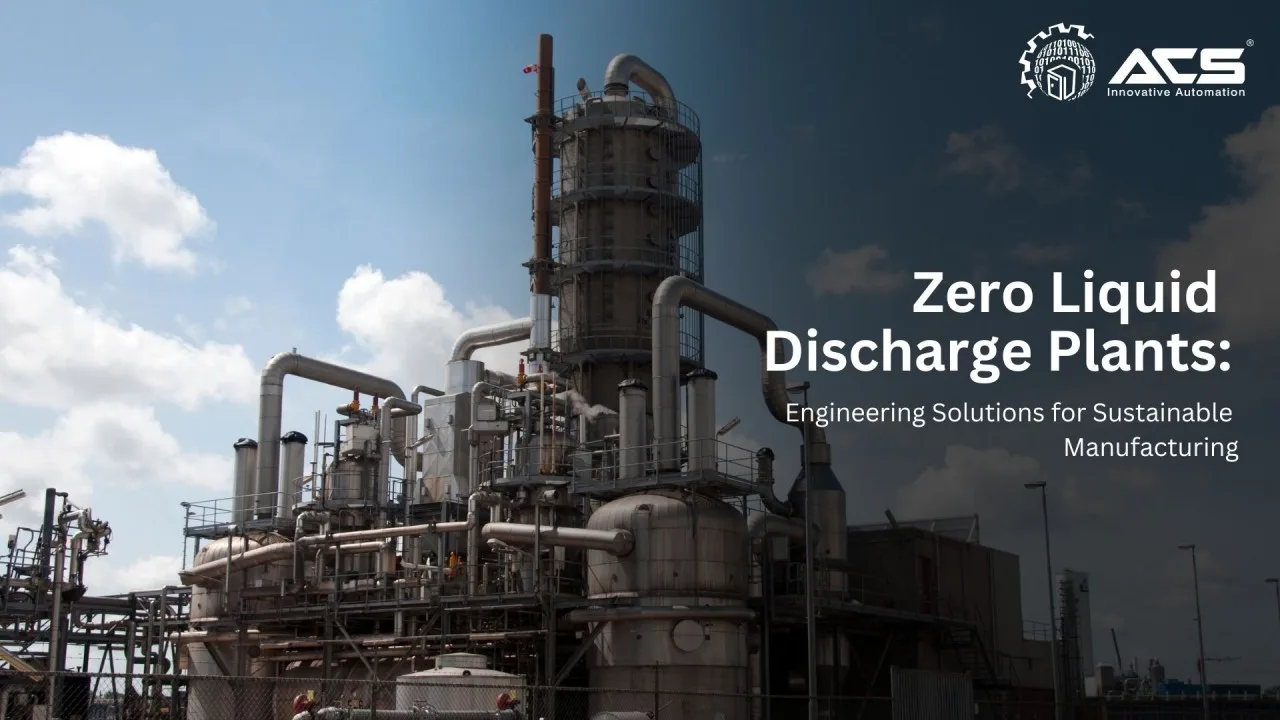
Zero Liquid Discharge (ZLD) has transitioned from an environmental ideal to a regulatory requirement for industries across Gujarat. Achieving true ZLD demands sophisticated engineering solutions that balance treatment effectiveness, energy efficiency, and operational economics.
The ZLD journey begins at the effluent treatment plant (ETP), where primary treatment removes suspended solids and reduces organic load. Automation plays a crucial role in optimizing chemical dosing for coagulation and flocculation. Real-time turbidity monitoring coupled with automated dosing systems reduces chemical consumption by 30% compared to manual operations while improving clarifier performance.
Secondary biological treatment requires precise control of aeration systems. Dissolved oxygen sensors linked to VFD-controlled blowers maintain optimal conditions for biological activity. A textile processing unit in Ahmedabad reduced aeration energy consumption by 40% through automated DO control while improving BOD reduction efficiency from 85% to 95%.
The ultrafiltration (UF) stage presents unique automation challenges. Membrane fouling significantly impacts performance and operating costs. Automated backwash sequences based on transmembrane pressure differentials optimize cleaning cycles. Smart controls adjust backwash frequency and duration based on feed water quality trends, extending membrane life by 20-30%.
Reverse osmosis (RO) systems require sophisticated control strategies to maximize recovery while preventing scaling. Online conductivity monitoring enables real-time adjustment of recovery rates. Antiscalant dosing synchronized with feed water quality variations prevents membrane damage while minimizing chemical usage. Automated clean-in-place (CIP) sequences ensure consistent performance without manual intervention.
The concentration and crystallization stages demand precise control to achieve zero discharge. Multiple effect evaporators (MEE) operate most efficiently when steam pressures and feed rates maintain optimal balance. Model predictive control algorithms anticipate load changes and adjust operations proactively, improving steam economy from typical 3.5 kg/kg to below 2.8 kg/kg.
Mechanical vapor recompression (MVR) systems offer energy-efficient alternatives for specific applications. The key lies in maintaining precise compression ratios and heat transfer conditions. A pharmaceutical intermediate manufacturer achieved 70% energy reduction by converting from MEE to MVR with advanced automation controls.
Integration challenges often determine ZLD success. Each treatment stage must communicate seamlessly to optimize overall performance. A distillery implemented integrated automation where upstream flow changes automatically adjust downstream operations. This coordination prevents system overloads while maximizing throughput during varying production schedules.
Energy recovery opportunities abound in ZLD systems. Condensate from evaporators preheats incoming feed streams. Variable frequency drives on all major pumps and blowers adjust speeds to match actual demands. Combined heat and power systems utilize waste heat for evaporation processes. These integrated approaches reduce operating costs by 35-45%.
Crystallizer operations require exceptional precision to produce saleable byproducts rather than hazardous waste. Temperature, residence time, and supersaturation levels determine crystal quality. Automated controls maintain these parameters within narrow ranges, converting waste streams into revenue sources.
Remote monitoring capabilities prove invaluable for ZLD operations. Process experts can diagnose issues and optimize performance without site visits. Cloud-based analytics identify efficiency improvement opportunities by comparing performance across multiple installations.
The economics of ZLD have improved dramatically through automation advances. While capital costs remain substantial, operating cost reductions and resource recovery values create attractive payback periods. Water recovery for reuse, salt recovery for sale, and reduced disposal costs combine to justify investments.
About ACS ENGITECH
ACS ENGITECH PRIVATE LIMITED has established itself as a leader in ZLD automation solutions. Having successfully commissioned over 150 MEE plants and numerous integrated ZLD systems, the company brings unmatched expertise to sustainable manufacturing challenges. From concept through commissioning, ACS ENGITECH delivers solutions that meet both regulatory requirements and economic objectives.
Achieve true zero liquid discharge with proven automation solutions. Contact our ZLD specialists to explore sustainable options for your facility.
#ZeroLiquidDischarge #SustainableManufacturing #EnvironmentalCompliance #WaterRecycling #IndustrialSustainability #EffluentTreatment #GreenManufacturing #WaterConservation #CircularEconomy #ProcessAutomation