
Panel Design Standards: Ensuring Safety and Efficiency in Industrial Control Systems
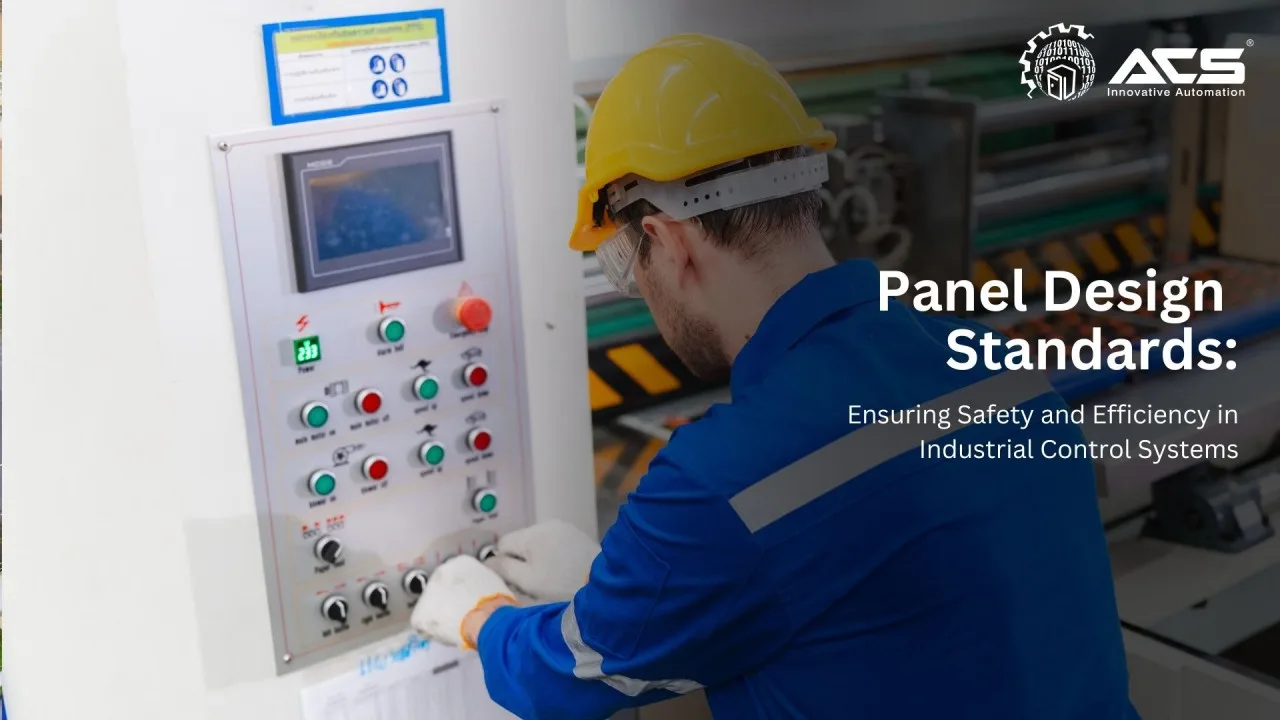
Control panel design extends far beyond arranging components in an enclosure. Adherence to international standards like IEC 61439 and IEC 60204 ensures safety, reliability, and operational efficiency while meeting regulatory requirements across industries.
IEC 61439 fundamentally changed low-voltage switchgear design philosophy. Unlike its predecessor IEC 60439, the current standard places responsibility on panel builders to verify designs through testing, calculation, or comparison with tested reference designs. This approach ensures every panel leaving the manufacturing facility meets stringent safety and performance requirements.
Temperature rise verification prevents premature component failure and fire hazards. Design calculations must prove internal temperatures remain within component ratings under worst-case conditions. A pharmaceutical panel manufacturer discovered their standard designs exceeded temperature limits when fully loaded. Redesigning with larger enclosures and strategic ventilation reduced internal temperatures by 15°C, extending component life significantly.
Short-circuit withstand capability verification ensures panels survive fault conditions without catastrophic failure. Proper busbar sizing, support spacing, and bracing prevent mechanical damage during short circuits. CPRI testing of panel designs validates calculations, providing confidence in fault withstand ratings. One panel builder's tested design withstood 50kA fault current, earning approvals for critical infrastructure projects.
IEC 60204 addresses safety aspects of electrical equipment in machines. The standard mandates emergency stop circuits, safety interlocking, and proper grounding throughout control systems. Color coding requirements ensure consistency - red for emergency stops, yellow for safety guards, green for start functions. This standardization reduces operator errors across different machines.
Protection against electric shock requires systematic implementation of basic and fault protection measures. IP ratings must match environmental conditions - IP55 for dusty environments, IP66 for washdown areas. Proper segregation between power and control circuits prevents dangerous voltages from appearing on operator interfaces. Door interlocking ensures access only when safe conditions exist.
EPLAN software revolutionizes panel design documentation. Automatic wire numbering, cross-referencing, and terminal planning eliminate manual documentation errors. Integration with manufacturing systems enables automatic wire cutting and labeling, reducing assembly time by 40%. Digital twins of panels support troubleshooting and modification throughout the equipment lifecycle.
Component selection impacts long-term reliability and maintenance costs. Type 2 coordination for motor starters ensures only contactors require replacement after short-circuit events, avoiding costly circuit breaker replacement. Properly sized components operating at 70-80% rating last significantly longer than components pushed to limits.
Thermal management design prevents premature failures in harsh environments. Strategic component placement puts heat-generating devices like drives and power supplies near ventilation points. Adequate spacing between components enables convection cooling. Forced ventilation with filtered air intake maintains positive pressure, preventing dust ingress while removing heat.
Wire routing and management affect both reliability and maintainability. Separate power and control wiring prevents electromagnetic interference. Proper bend radius maintenance prevents conductor damage. Wire ducting fill calculations ensure adequate ventilation around conductors. Service loops facilitate component replacement without rewiring.
Earthing system design ensures safety and proper operation. Separate earthing bars for power and electronic circuits prevent ground loops. Proper earthing conductor sizing handles fault currents without dangerous voltage rises. Equipotential bonding throughout the panel structure prevents touch voltage hazards.
Testing protocols validate design compliance before shipment. Insulation resistance testing verifies wire integrity. High-potential testing confirms insulation system adequacy. Functional testing ensures control logic operates correctly. Torque verification on connections prevents loose terminals causing failures. Documentation packages including test certificates provide quality assurance.
Modular design approaches improve both manufacturing efficiency and field maintainability. Standard sub-assemblies for common functions reduce engineering time while ensuring consistent quality. Modular construction enables parallel assembly, reducing delivery times. Field modifications become simpler when standard modules can be added or replaced.
Environmental considerations increasingly influence panel design. RoHS compliance eliminates hazardous substances. Energy-efficient components reduce operating costs. Recyclable materials support sustainability goals. These considerations no longer represent optional extras but fundamental requirements for responsible manufacturing.
About ACS ENGITECH
ACS ENGITECH PRIVATE LIMITED exemplifies excellence in control panel manufacturing, utilizing EPLAN design software and maintaining strict adherence to IEC standards. With CPRI-approved PMCC panels and ERDA-certified IP55 enclosures, the company delivers solutions meeting the highest safety and quality standards. Their 6,000 square foot manufacturing facility produces panels ranging from simple motor control centers to complex automation systems for diverse industries.
Ensure your control panels meet international standards. Consult with our design experts for IEC-compliant panel solutions.
#ControlPanels #IECStandards #ElectricalSafety #PanelDesign #IndustrialSafety #ElectricalEngineering #ManufacturingStandards #QualityControl #PanelBuilding #SafetyCompliance