PLC Programming Documentation: Why Commented Code Determines Long-Term System Value.
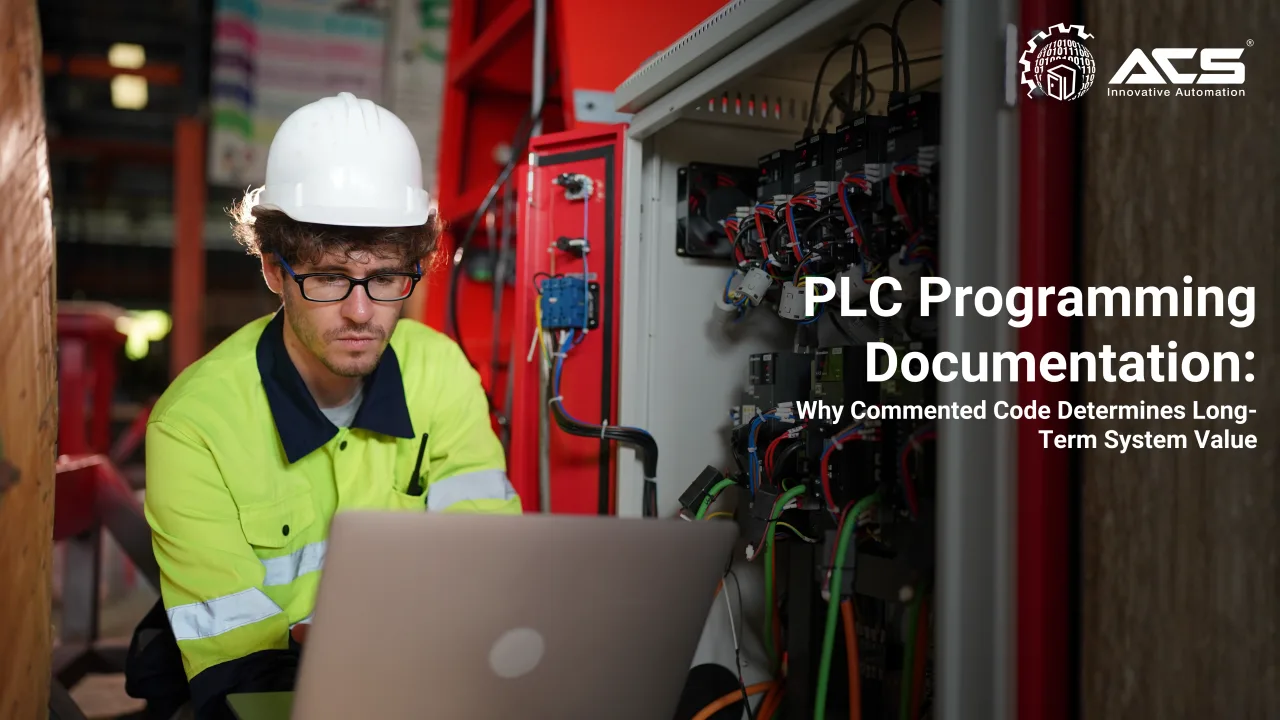
PLC program documentation represents one of the most overlooked value factors in automation systems. A functioning program without documentation might work perfectly for years, but any modification or troubleshooting requires extensive reverse engineering. The long-term value of automation systems depends critically on maintainability, which documentation determines.
Program comments serve multiple distinct purposes. First-level comments explain what specific code segments do 'This timer controls cooling cycle duration.' Second-level comments explain why design choices were made' 10-second delay prevents thermal shock to glass during rapid temperature changes.' Third-level comments preserve institutional knowledge 'Customer requires manual override for safety certification compliance.' Each level adds value during future maintenance.
We recently provided maintenance support for a pharmaceutical facility where the previous integrator delivered functioning systems but minimal documentation. The PLC programs controlled complex batch processes with temperature profiles, material additions at specific stages, and quality checks at critical points. The logic worked correctly, but program comments consisted mostly of generic labels like 'Timer_1' and 'Motor_Start.' Understanding why specific sequences occurred in a particular order required watching complete batch cycles and interviewing production operators.
When the facility needed modifications, adding a new material feed system integrating into existing batch logic, the project became far more complex than necessary. Engineers couldn't confidently identify where to insert new logic without understanding the existing program structure. We spent approximately 40 hours reverse engineering the program logic, documenting our findings, and then implementing relatively straightforward modifications. With proper initial documentation, the same work might have required 12-15 hours.
Variable naming conventions dramatically affect program readability. Consider two approaches to naming a motor control output. Generic naming: 'Q4.0' or 'Output_27.' Descriptive naming: 'CoolingPump_M23_Start' or 'Mixer_MainMotor_Run.' The generic names require consulting the I/O lists to understand the function. Descriptive names communicate function immediately. Multiply this difference across hundreds of I/O points, and the cumulative effect on troubleshooting efficiency becomes substantial.
Function block documentation requires particular attention. Modern PLC programming uses function blocks encapsulating logic for reuse, PID control blocks, timer functions, and sequencing controls. Each function block should include header comments explaining parameters, expected inputs, return values, and any non-obvious behavior. Without this documentation, engineers must examine internal block logic to understand interface requirements.
Process-specific knowledge deserves detailed documentation. A chemical batching process might have timer values that seem arbitrary why 45 seconds rather than 30 or 60? If the programmer documents that 45 seconds allows complete drainage from a specific tank based on piping configuration and viscosity, future engineers understand they can't arbitrarily change the timer without considering physical constraints.
Safety logic demands comprehensive documentation explaining both function and regulatory requirements. A program might include interlocks preventing the simultaneous operation of specific equipment. Without documentation explaining how these interlocks prevent hazardous conditions identified during safety analysis, future engineers might view them as unnecessary complexity and remove them during modifications.
Vendor-specific device behavior needs documentation. Third-party devices integrated through communication protocols often have quirks, such as specific register scaling, required initialization sequences, or error handling requirements. Documenting these details prevents frustration when devices behave unexpectedly during modifications or replacement with different models.
Algorithm explanations help future engineers understand complex logic. A temperature control program might implement specialized algorithms for particular process characteristics. Documenting the control strategy 'Uses cascade control with primary loop controlling reactor temperature and secondary loop controlling cooling water flow rate to minimize overshoot during exothermic reactions' allows future engineers to maintain the control approach when tuning or troubleshooting.
Documentation of undocumented features sounds paradoxical, but proves valuable. Real-world automation systems often include workarounds for equipment limitations or process quirks. A program might include logic compensating for a sensor's slow response time or working around mechanical hysteresis in a valve. Documenting these workarounds explains otherwise puzzling code and prevents their accidental removal during program cleanup.
Modification history within comments tracks system evolution. Each significant program change should include dated comments explaining what changed and why. This modification log helps engineers understand how the current logic evolved and whether previous approaches were tried and abandoned for specific reasons. Without this history, engineers might repeat past mistakes.
External documentation complements inline comments. A separate document describing overall system architecture, major control sequences, and design philosophy provides context that's impractical to include in program comments. We typically deliver a 15-25 page system description document alongside program backups, explaining key design decisions and operational theory.
The cost-benefit calculation favors comprehensive documentation. Initial PLC programming for a moderate-complexity system might require 80-100 hours. Adding thorough documentation might increase this to 95-120 hours, a 15-20% increase. Over the system's 10-15 year life, this incremental investment pays back many times through reduced modification cost and improved troubleshooting efficiency.
We implemented documentation standards after analyzing our own maintenance costs across multiple projects. Systems we commissioned with comprehensive documentation required average 4.5 hours per modification during subsequent years. Systems commissioned with minimal documentation averaged 11 hours per modification—more than double. The difference stemmed entirely from time spent understanding existing logic before implementing changes.
Documentation requirements should appear in automation specifications. Purchase orders should explicitly require comprehensive inline comments, descriptive variable names, function block documentation, and external system description documents. Making documentation a contractual deliverable ensures integrators allocate appropriate engineering time during development rather than treating it as optional effort.
Review processes during commissioning should verify documentation quality. We now include documentation review as a formal commissioning step. An engineer not involved in program development reviews code and documentation, attempting to understand system operation from documentation alone. If they can't understand logic flow and design intent without extensive questions, documentation is inadequate.
Long-term system value depends on maintainability more than initial functionality. A poorly documented program might work flawlessly for years, but it becomes expensive to modify and difficult to troubleshoot when the original programmers are unavailable. A well-documented program preserves knowledge and enables cost-effective long-term operation. The difference between these outcomes depends on documentation investment during initial development.
About ACS Engitech: We deliver PLC programs with comprehensive documentation as standard practice, not an optional extra. Our programming standards require descriptive variable names, inline comments explaining both function and design rationale, documented function blocks, and external system description documents. This approach increases initial engineering cost by approximately 15-20% but reduces modification cost throughout system life by more than 50%. For manufacturing facilities planning to operate automation systems for 10-15 years, proper documentation represents an essential investment protecting long-term system value and operational flexibility.
📧 Email: sales@acsengitech.com | satish@acsengitech.com 📞 Phone: +91-990-902-7347 🌐 Visit: www.acsengitech.com