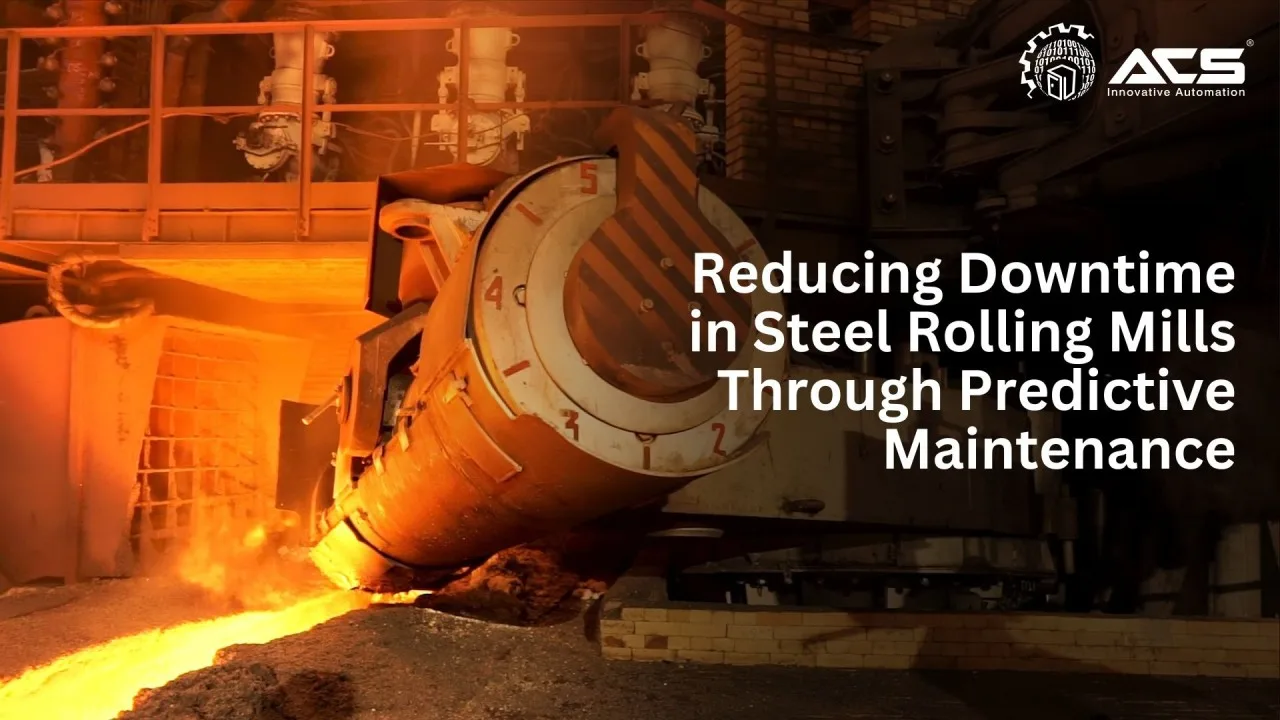
Reducing Downtime in Steel Rolling Mills Through Predictive Maintenance
Steel rolling mills operate under extreme conditions where unexpected failures cost lakhs per hour in lost production. Traditional time-based maintenance often replaces components prematurely or fails to prevent catastrophic failures. Predictive maintenance powered by modern automation systems transforms maintenance from reactive firefighting to proactive optimization.
The foundation of effective predictive maintenance lies in comprehensive data collection. Modern rolling mills generate enormous data volumes from thousands of sensors monitoring temperature, vibration, pressure, and electrical parameters. A cold rolling mill in Gujarat implemented distributed I/O systems collecting data from 2,300 points across the production line. This granular monitoring revealed patterns invisible to traditional inspection methods.
Vibration analysis proves particularly valuable for rolling mill applications. Accelerometers mounted on mill stands, gearboxes, and motors continuously monitor vibration signatures. Advanced PLCs with integrated condition monitoring functions analyze frequency spectrums in real-time. When bearing deterioration begins, characteristic frequencies appear months before failure. A 6-stand tandem mill avoided catastrophic bearing failure by detecting early-stage degradation, scheduling replacement during planned maintenance rather than suffering unscheduled downtime.
Temperature monitoring extends beyond simple overheating protection. Thermal imaging cameras integrated with automation systems track temperature distributions across rolls and bearings. Unusual hot spots indicate alignment issues, excessive friction, or lubrication problems. One facility discovered minor misalignment causing premature roll wear, correcting the issue before surface quality degradation impacted customer shipments.
Motor current signature analysis provides insights into both electrical and mechanical health. VFDs with advanced diagnostic capabilities monitor current harmonics, identifying issues like rotor bar problems or coupling misalignment. A hot rolling mill detected developing coupling wear through current analysis, preventing a failure that would have damaged both motor and gearbox.
Hydraulic system health significantly impacts rolling mill reliability. Pressure transducers and flow meters linked to SCADA systems track hydraulic performance degradation. Filter differential pressure monitoring triggers maintenance before contamination causes servo valve failures. Automatic gauge control (AGC) systems particularly benefit from hydraulic health monitoring, maintaining thickness tolerances despite gradual system degradation.
Oil analysis integration takes predictive maintenance beyond traditional boundaries. Online particle counters and moisture sensors continuously monitor lubrication oil condition. When integrated with automation systems, these sensors trigger alerts before contamination levels impact equipment life. A skin pass mill reduced bearing failures by 75% through automated oil condition monitoring and filtration control.
Load monitoring reveals mechanical degradation patterns. Rolling force measurements compared against product parameters identify when rolls require regrinding or replacement. Automation systems track cumulative loads, predicting roll life based on actual usage rather than simple tonnage counts. This approach optimized roll grinding schedules, reducing grinding frequency by 20% while maintaining surface quality.
Data analytics platforms transform raw sensor data into actionable maintenance insights. Machine learning algorithms identify complex failure patterns spanning multiple parameters. A plate rolling mill discovered correlation between specific vibration patterns and gearbox failures occurring weeks later. This early warning system prevented three potential failures in the first year of implementation.
Integration with maintenance management systems closes the loop between prediction and action. When automation systems detect developing issues, work orders generate automatically with relevant diagnostic data attached. Maintenance teams arrive prepared with correct parts and tools, reducing repair time by 40%.
The financial impact extends beyond prevented failures. Optimized maintenance scheduling reduces spare parts inventory by maintaining components until actually necessary. Energy consumption decreases as equipment operates at peak efficiency throughout its life. Product quality improves through consistent equipment performance.
About ACS ENGITECH
ACS ENGITECH PRIVATE LIMITED specializes in automation solutions for steel and aluminum industries. With successful implementations ranging from wire drawing machines to complete rolling mill automation, the company understands the unique challenges of metal processing operations. Their predictive maintenance solutions combine Siemens technology with industry-specific expertise to maximize equipment reliability and production efficiency.
Transform your maintenance strategy from reactive to predictive. Contact our rolling mill automation specialists to explore condition monitoring solutions for your facility.
#PredictiveMaintenance #SteelIndustry #RollingMills #IndustrialReliability #ConditionMonitoring #MaintenanceOptimization #Industry40 #ManufacturingExcellence #DowntimeReduction #SmartMaintenance