
Automation Challenges in Plastic and Rubber Industries: Technical Solutions
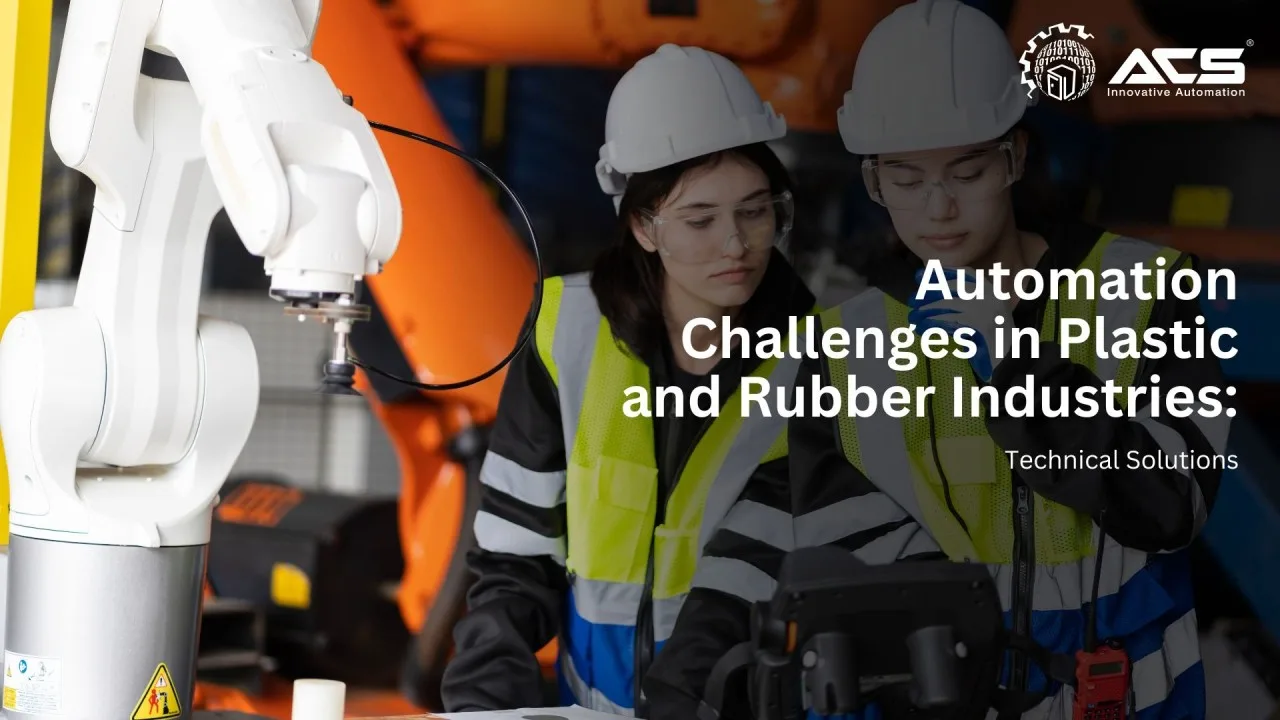
Plastic and rubber processing present unique automation challenges stemming from material variability, complex rheological behaviors, and stringent quality requirements. Success demands specialized solutions addressing industry-specific requirements while maintaining flexibility for diverse product ranges.
Temperature control precision fundamentally determines product quality in polymer processing. Conventional PID control struggles with the non-linear heating and cooling characteristics of large thermal masses. Advanced PLC algorithms implementing model predictive control achieve ±0.5°C stability across multiple heating zones. An injection molding facility producing medical components improved first-pass quality from 92% to 98.5% through precise barrel temperature control.
Pressure control during molding and extrusion requires millisecond response times. Hydraulic servo systems integrated with high-speed PLCs maintain cavity pressure profiles within ±1 bar throughout injection cycles. This precision proves critical for thin-wall molding where slight pressure variations cause dimensional inconsistencies. Closed-loop control using cavity pressure sensors eliminates short shots and flash defects.
Material handling automation addresses the complexity of managing hundreds of raw material grades. RFID-tagged containers linked to recipe management systems prevent material mix-ups. Automated conveying systems with integrated weighing precisely deliver materials to processing machines. A rubber compounding operation reduced material errors by 95% through automated ingredient handling, eliminating costly rework.
Extruder control demands coordination between multiple variables. Screw speed, barrel temperatures, die pressure, and haul-off speed must maintain precise relationships. Multi-variable control strategies implemented in modern PLCs optimize these parameters simultaneously. Thickness control systems using laser measurement and automatic haul-off speed adjustment maintain tolerances within ±2% for film and sheet production.
Curing process optimization in rubber manufacturing requires precise time-temperature control. Automation systems calculate equivalent cure times based on actual temperature profiles, compensating for heating variations. This approach ensures consistent cross-linking regardless of ambient conditions or batch sizes. A tire manufacturing unit reduced cure time variations from ±8% to ±2% through automated cure optimization.
Quality inspection integration prevents defective products from reaching customers. Vision systems linked to automation platforms inspect products in real-time. Machine learning algorithms identify defect patterns, automatically adjusting process parameters to prevent recurrence. An automotive seal manufacturer reduced customer complaints by 70% through integrated automated inspection.
Color matching and mixing automation addresses one of the industry's most challenging aspects. Spectrophotometers integrated with dosing systems automatically adjust colorant additions to match target specifications. Closed-loop color control eliminates manual color matching iterations. This technology proves particularly valuable for custom color production with small batch sizes.
Energy optimization in plastic processing focuses on heating and cooling efficiency. Barrel heater control using pulse-width modulation reduces energy consumption by 20% compared to simple on-off control. Heat recovery systems capture waste heat from hydraulics and cooling circuits. Intelligent startup sequences bring equipment to operating temperature using minimal energy.
Mold change automation significantly reduces downtime in injection molding operations. Quick mold change systems with automated connection of utilities, temperature control zones, and ejector systems reduce changeover time from hours to minutes. RFID-enabled molds automatically load correct processing parameters, preventing setup errors.
Predictive maintenance proves particularly valuable given the high cost of processing equipment downtime. Vibration monitoring on extruder gearboxes predicts bearing failures months in advance. Thermal imaging of barrel heaters identifies failing elements before complete failure. One facility avoided six potential unplanned shutdowns in a year through predictive maintenance implementation.
Industry 4.0 integration enables new business models in plastic processing. Real-time production data sharing with customers provides transparency and builds trust. Automated quality certificates generated from process data eliminate manual documentation. Some processors offer performance-based contracts enabled by comprehensive process monitoring and control.
About ACS ENGITECH
ACS ENGITECH PRIVATE LIMITED brings specialized expertise to plastic and rubber industry automation challenges. With successful implementations ranging from simple extruder controls to complete plant automation, the company understands the unique requirements of polymer processing. Their solutions combine advanced control strategies with practical industry knowledge to optimize both quality and efficiency.
Overcome your plastic and rubber processing automation challenges. Connect with our polymer industry specialists for tailored solutions.
#PlasticsIndustry #RubberManufacturing #ProcessControl #InjectionMolding #ExtrusionControl #PolymerProcessing #IndustrialAutomation #QualityControl #ManufacturingAutomation #PlasticsProcessing