
When a PLC Upgrade Becomes a Production Risk: Plan the Changeover Before the Hardware
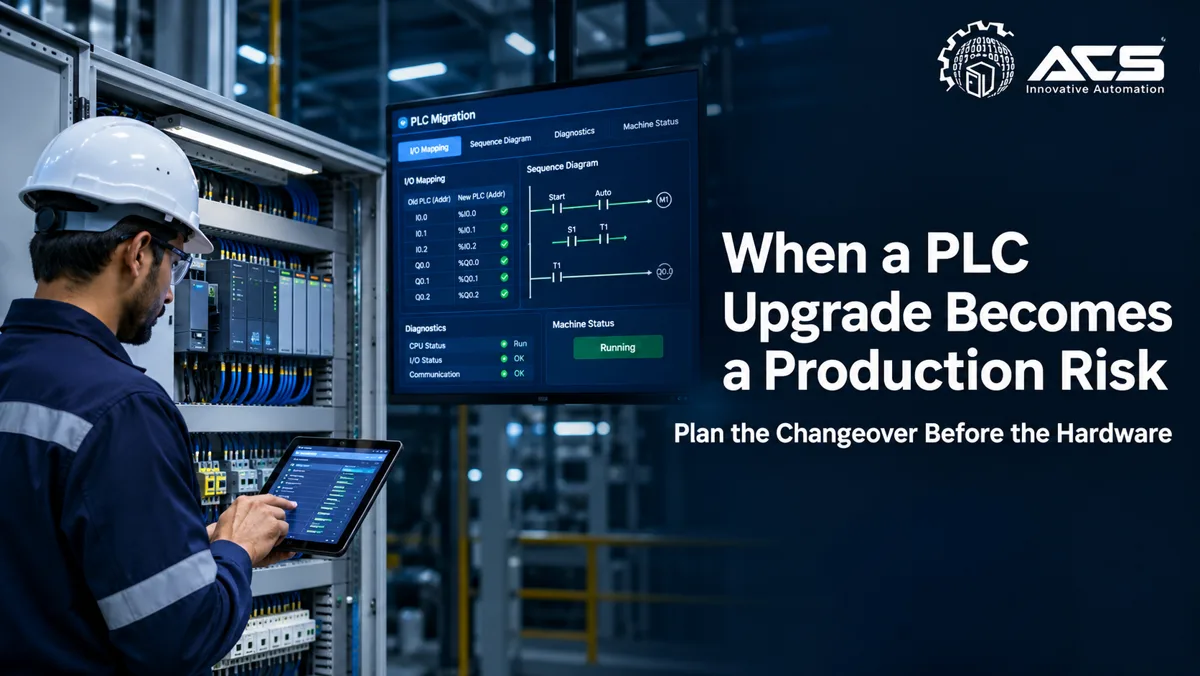
A plant has a legacy PLC that has run for years. Spare modules are becoming harder to source, the original programmer is no longer available and a production shutdown has finally been approved. It is tempting to view the project as replacing one processor with another. But the real risk is often hidden in undocumented interlocks, field wiring changes and operator habits. We at ACS Engitech recommend treating a PLC modernisation as a controlled process change.
Start with current electrical drawings, installed module lists, network diagrams and program backups. Then verify them on site. A drawing stamped years ago may not reflect the temporary bypass that became permanent or the sensor replaced during a breakdown. Record software versions, communication partners, HMI tags and critical setpoints. Observe normal start, stop, fault and manual operating sequences. Interview operators about awkward but common situations, such as restarting after a partial batch or recovering from an intermittent instrument.
Some migrations should preserve existing behaviour as closely as possible. Others may reasonably improve diagnostics or remove obsolete functions. Mixing both goals without clear approval makes testing difficult. Create a change register that labels each function as retain, modify or retire. Require production and engineering approval for changes affecting sequence or operational risk. Preserve essential protective functions according to the machine and process safety design; do not treat routine PLC logic as a substitute for independent safety measures where these are required.
A tag mapping table is essential, but it is not enough. Check signal polarity, analog scaling, input filtering, output fail state, pulse timing, communication update rates and device diagnostics. An identical tag name can behave differently when hardware or firmware changes. Confirm the behaviour of drives, remote I/O stations and connected HMIs. Document any network topology changes before ordering components. If the installed system includes third-party equipment, secure its interface requirements early.
A factory acceptance test should cover major sequences with simulated inputs and representative fault conditions. Where practical, use offline testing to compare expected behaviour with documented requirements. Build a site acceptance plan with step-by-step results, responsible people and clear stop criteria. Identify what evidence is needed before restarting production. Keep a versioned backup of the original system and define whether rollback is technically possible after field changes.
During the shutdown, record approved isolation procedures, field modifications, I/O checks and outstanding issues. Avoid undocumented late changes just because the machine is available. Provide operators with updated screens and a short explanation of anything that will feel different. After startup, review alarm frequency, manual interventions and the first production cycles. Our ACS Engitech service scope includes PLC, HMI, SCADA and commissioning work; the enduring lesson is to treat operational acceptance and maintenance handover as deliverables from day one.
Successful modernisation means more than a controller displaying a healthy status light. It means operators can run the line, engineers can diagnose faults and maintenance teams can restore the system using reliable backups and documentation. Ask one question before approving the project: 'How will we demonstrate that the new system behaves correctly on the first real shift?' Let that answer shape the migration plan.