
Alarm Fatigue in a Control Room: The Screen Is Talking, but Nobody Is Listening
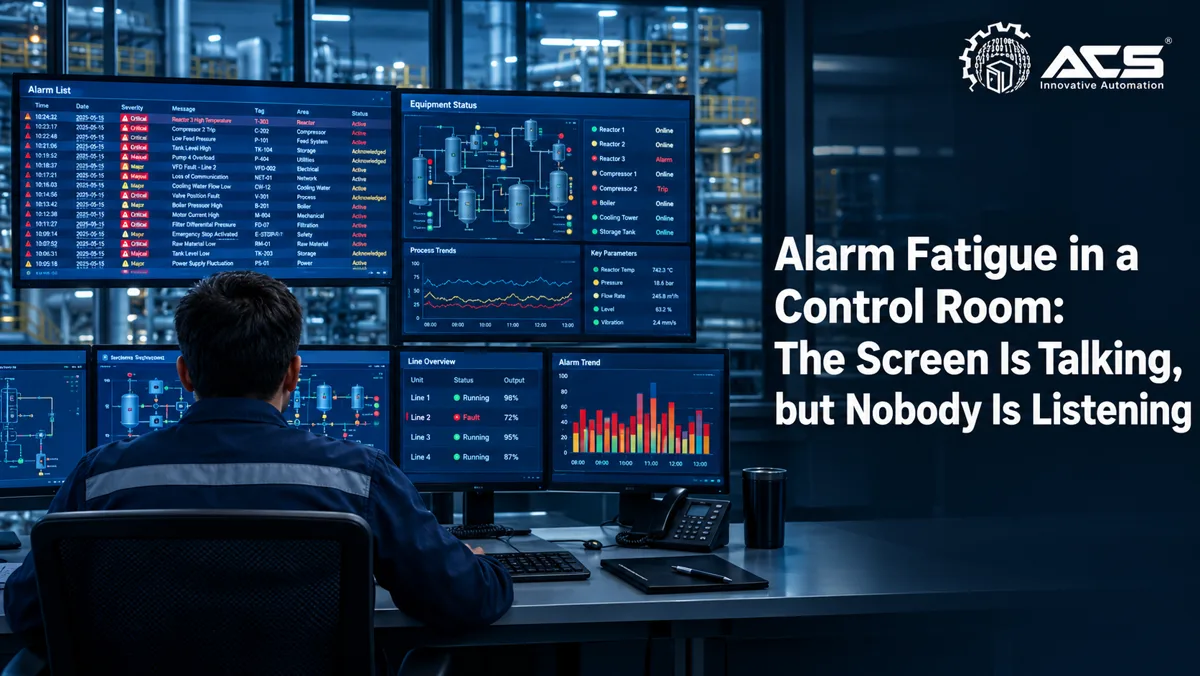
Imagine an operator looking at thirty active messages during a difficult startup. Some indicate equipment conditions, others merely confirm a mode change and several repeat every few seconds. The screen is busy, but the operator still has to ask which event requires action now. We at ACS Engitech believe alarm design should begin with the person responding to it, not with the number of PLC tags available. A useful alarm tells the operator that an abnormal condition exists and identifies a timely response.
A machine started is usually an event. A motor overload trip may be an alarm. A batch-complete message may be an operator notification. These categories should not compete for the same visual and audible attention. Review each proposed alarm and ask: what abnormal condition does it indicate, what consequence might follow and what action is expected? If nobody can name the response, reconsider the alarm's purpose.
Do not assign high priority because a device is expensive or a tag has a dramatic name. Consider credible consequences and the time available for a trained operator to respond. Involve process, maintenance, operations and safety specialists when setting the rules. Alarm-priority design must remain consistent with formal safety studies and the plant's approved alarm philosophy. Where action time is short, the information on screen should be unambiguous.
Look at alarm history around startup, shutdown, product changes and known disturbances. Identify repeated chattering alarms, cascading messages after one initiating event and alarms that remain active long after they are useful. Review signal quality, deadbands, delays and equipment states before changing configuration. Do not suppress an alarm simply because it is annoying. Any adjustment requires an engineering review of the initiating condition, risk and required response.
A tag name such as P101_TRIP_2 may be clear to the developer but less useful at 2 a.m. A practical message identifies the equipment, condition and, when appropriate, an operator action or approved reference procedure. For example, 'Transfer pump P101 stopped: inspect drive fault before restart' is more helpful than an unexplained hexadecimal code. Make diagnostic detail available without crowding the primary screen. Consistent naming, readable colours and an acknowledgement procedure matter.
Alarm lists often look reasonable during steady production. Their weaknesses appear during utility loss, equipment restart or communication failure. Simulate these scenarios during a planned test where possible. Can the operator identify the first significant event? Are related messages grouped logically? Does the system retain enough history for later investigation? Are communication failures clearly distinguished from process alarms? At ACS Engitech, our SCADA and HMI integration work makes these questions central to a useful operator experience.
Do not judge a control room by how many variables it can display. Judge it by how confidently an operator can tell what changed, why it matters and what to do next. An alarm clean-up project should include a documented alarm philosophy, review process and ownership for future changes. Ask your operators which three messages they mistrust.